
Procedures
Spinal decompression surgery.
Your spine can withstand a great deal of pressure. But when something shifts inside it, it can create intolerable pressure that pinches your nerves and causes significant pain and discomfort.
Overview
What is decompression surgery?
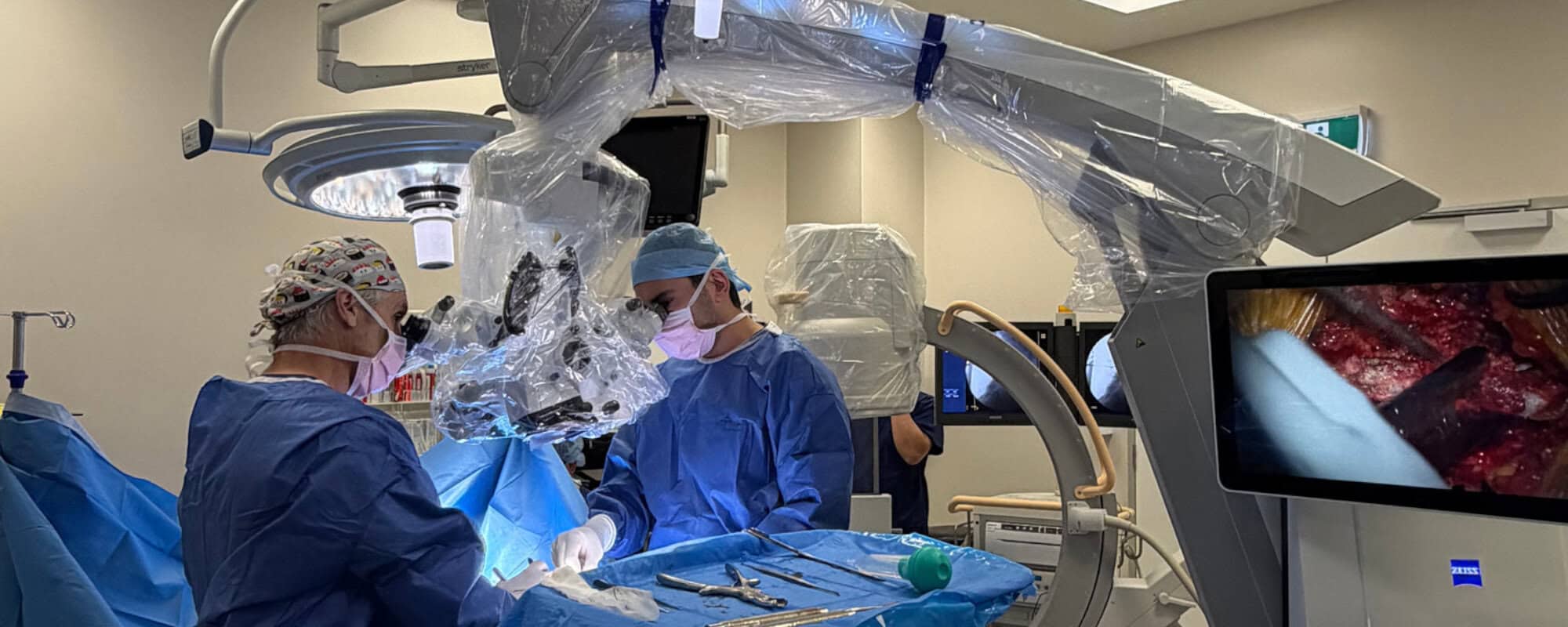
Spinal decompression surgery is done to relieve pressure on your nerves by widening a narrowed spinal canal or removing a portion of a herniated disc. It can be performed anywhere along your spine from your neck to your lower back, depending on where the problem is.
Your spine has a precise structure that includes:
- Vertebrae — hollow, bony building blocks
- Joints — that connect one vertebra to another to allow movement
- Discs — these sit between your vertebrae to cushion movement and absorb shock
- Nerves — your spinal cord runs through the hollow column formed by your vertebrae
Nerves exit your spine at each vertebra. Sometimes when the bony structures of your spine degenerate, one of your spinal nerves can be pinched or compressed, causing pain. That is when spinal decompression surgery may be advised.
Most common reason
Spinal stenosis.
Spinal stenosis is one of the most common reasons for having spinal decompression surgery. It happens when your spinal canal narrows and presses on your nerves. That can happen if you have:
An injury
Trauma that alters the shape of the canal.
A bone spur
A bony overgrowth, commonly caused by osteoarthritis.
An arthritic cyst
A cyst arising from a worn facet joint.
A herniated disc
Disc material pushing into the canal.
A tumour
Primary or metastatic tumour growing into the canal.
Procedures
Types of spinal decompression surgery.
Microdiscectomy
A minimally invasive decompression surgery performed to relieve pressure caused by a herniated disc.
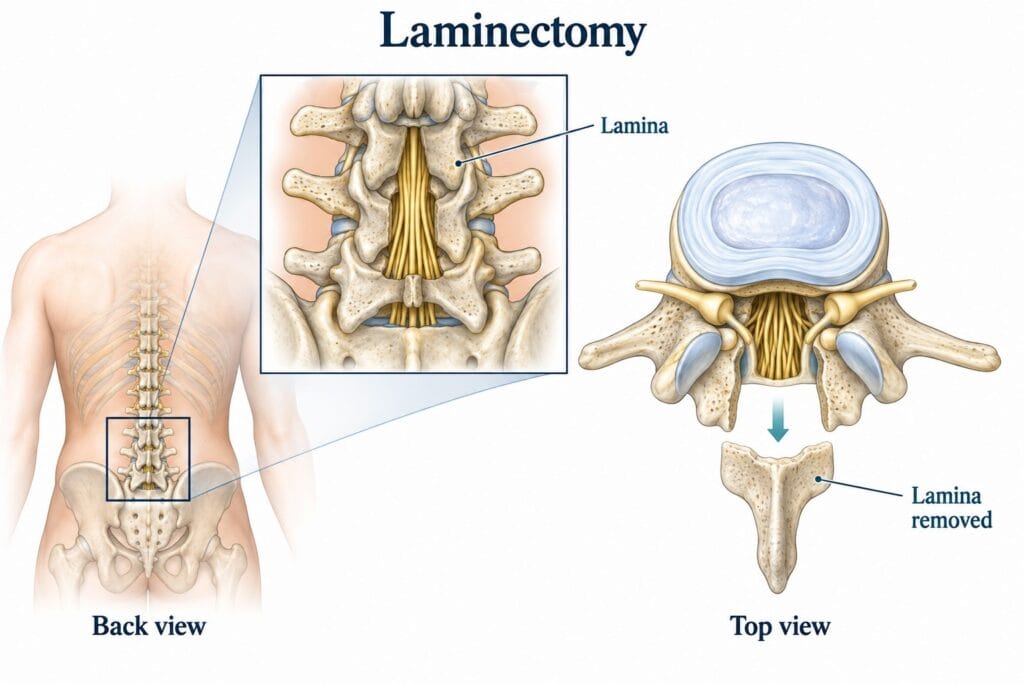
Laminectomy
Removing part of your vertebral bone (lamina) to ease pressure on your spinal cord and nerve roots.
Laminoplasty
A decompression surgery for your neck in which metal plates are inserted to hold open the lamina, the roof of the spinal canal.
Decompression with fusion
Two surgeries performed together — one to relieve the pressure on your nerves, the other to stabilise your spine through spinal fusion.
Success rate
Surgery to relieve pressure on the nerve roots can ease pain in the majority of patients. Unfortunately the underlying problem may return — a degenerative condition like osteoarthritis may cause new bony growths to pinch your nerves once more.
Recovery
The recovery process.
After spinal decompression surgery you will spend several days in hospital, then start a program of physiotherapy to strengthen your body and improve your freedom of movement.
We do not want you to live with ongoing back pain when there are treatment options available to help you. Once your doctor writes a referral, you are ready to make an appointment. Dr Edis will examine you and any previous test results, listen as you describe your symptoms, and recommend the most appropriate treatment options.
Living with back, neck or joint pain?
Dr David Edis and the team at Victorian Orthopaedic Spine Service will assess your symptoms, explain your diagnosis and recommend the treatment that best suits you.
Get in touch
Contact our rooms.
Our reception team will help you arrange a consultation, answer questions about your referral and let you know what to bring on the day.
Reception hours: Monday to Thursday 9am–4.30pm, Friday 9am–2pm
Response time: within 1–2 business days
Preparing for your appointment →
Referrals
A current GP or specialist referral is required.
Request a consultation
Send us your details and our reception team will be in touch. We aim to reply within 1–2 business days. Fields marked with an asterisk (*) are required.
All information is general in nature. Patients should consider their own personal circumstances and seek a second opinion. Any surgical or invasive procedure carries risks.