
Treatments and surgery
Back surgery in Melbourne.
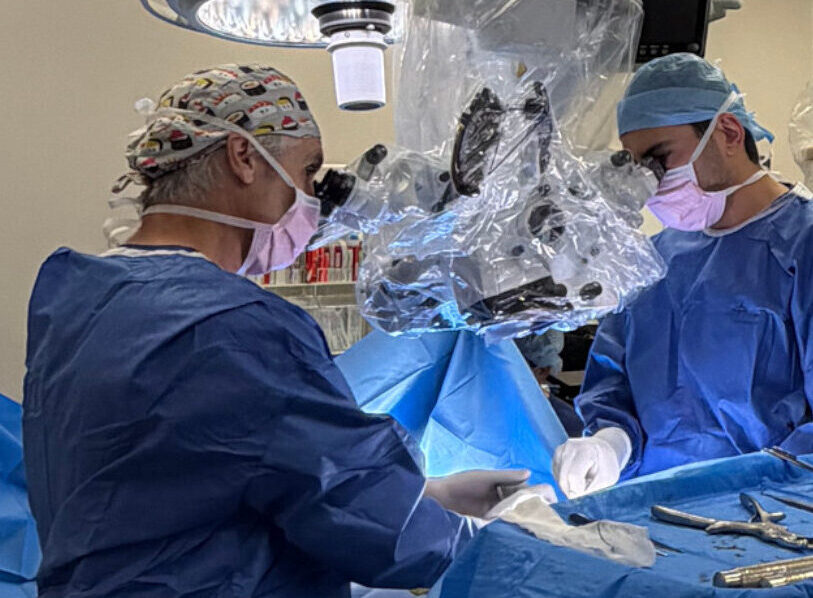
When you are living with ongoing back pain, your thoughts may eventually turn to back surgery. Understanding how your back works may help you understand whether back surgery would help you and, if so, which type is most appropriate.
Overview
Back surgery is a big topic.
Back surgery is a big topic and you are bound to have many questions about it. Your back is a complex structure, meaning your back pain could have several possible sources.
Once you have an accurate diagnosis, then it is a case of exploring your treatment options, usually starting with conservative treatments like physiotherapy and medication and only progressing to back surgery if you really need it.
If you would like to arrange a consultation with our spinal surgeon Dr David Edis, please contact our clinic today.
Anatomy
The structure of your back.
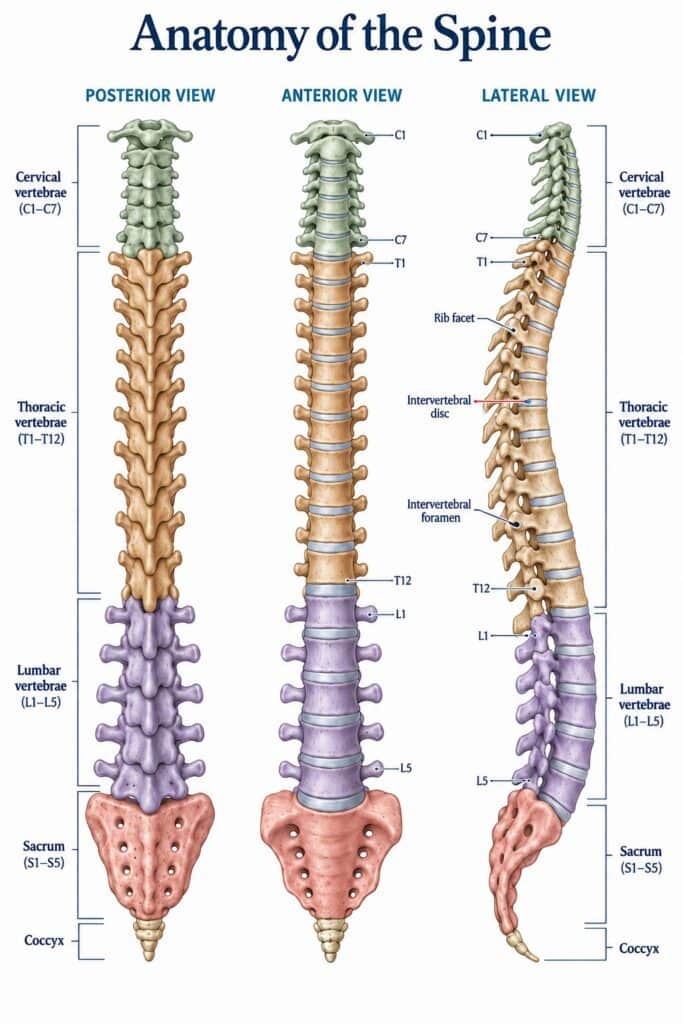
There are five main parts to your spine: your vertebrae, joints, nerves, discs and the muscles that support them.
Vertebrae
Your spine has 24 vertebrae plus your sacrum and coccyx — 26 motion segments. Divided into the cervical spine (C1-C7), thoracic spine (T1-T12) and lumbar spine (L1-L5), which bears the bulk of your weight.
Joints
Each vertebra has a pair of small facet joints that connect one vertebra to another while still allowing movement. The facet joints in your lower back are particularly vulnerable to degeneration and injury.
Nerves
Your spinal cord runs through and is protected by your spinal column. When the bony structures degenerate, a spinal nerve can be pinched or compressed, causing pain.
Discs
Sandwiched between each vertebra is a shock-absorbing disc that prevents your bones rubbing against each other. As you get older, your discs may degenerate.
Muscles
The muscles around your spine support it and control movement. When they are weak, tight or damaged they add to back pain and slow recovery after surgery.
Conservative care
When is back surgery not required?
The good news is that back surgery is often not needed for either acute or chronic back pain.
Acute back pain can strike without warning and be intensely painful. However, it usually gets better within 3 months, either by itself or with conservative treatment rather than back surgery.
Chronic back pain is long-lasting, often present for many months or years. Sometimes the pain persists even though the original injury has healed. These factors make chronic back pain harder to treat — but it can be done, with and without surgery.
Non-surgical treatments for back pain
- Physiotherapy
- Core-strengthening exercises
- Postural adjustment
- Acupuncture
- Dry needling
- Medications
- Steroid injections to your nerves
- Neurostimulation
When surgery helps
When is back surgery required?
At the Victorian Orthopaedic Spine Service, our care pathway is designed to ensure you only progress to back surgery if you really need it.
If you clearly do need surgery, we will get the wheels in motion. In most cases, though, we will try conservative treatments first and only move to surgical options if necessary.
Many people are understandably nervous about having surgery, particularly on a complex area like the spine. Back surgery is not an instant quick fix but it can help to stabilise your spine or relieve pressure on your discs or nerves.
Procedures
Types of back surgery.
We perform simple and complex back surgeries to relieve your pain and improve your mobility. The key ones are:
Spinal decompression
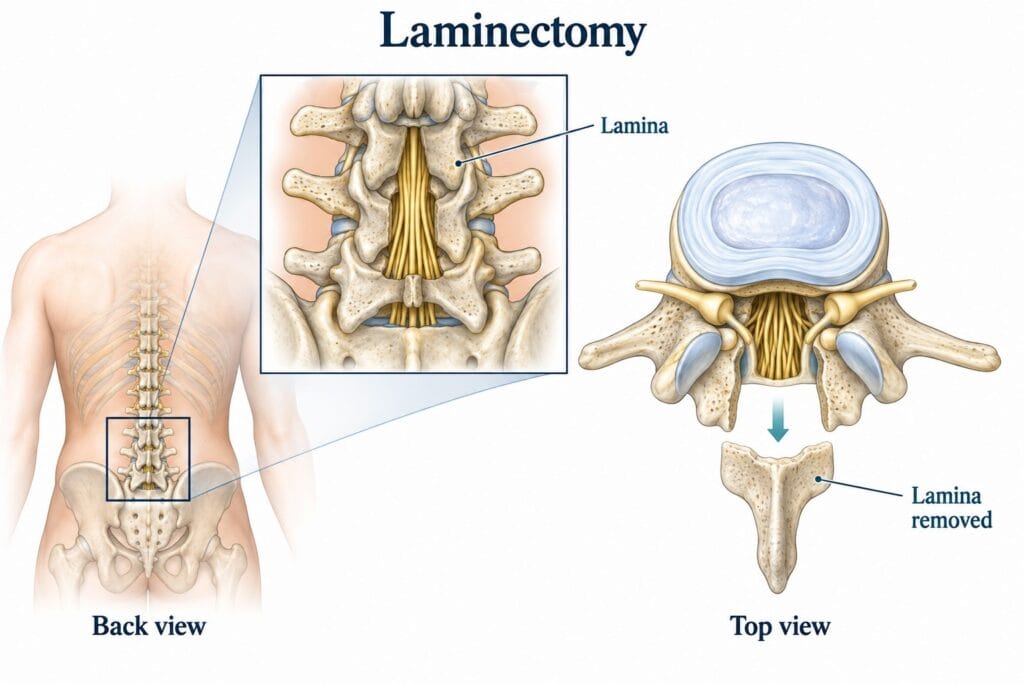
Microdiscectomy, laminectomy and laminoplasty relieve pressure on your nerves by widening a narrowed spinal canal or removing a portion of a herniated disc.
Spinal fusion
Fusion for degenerative disease and deformity using OLIF, ALIF or PLIF joins two or more vertebrae to improve stability, correct deformity and ease back pain.
Robotic and CT-navigated screws
Robotic guidance and CT-navigation techniques make spinal surgery shorter, less invasive and more accurate.
Fracture fixation and reconstruction
To help stabilise your spine, reduce the impact of your injury and maximise your long term function.
Tumour biopsy, resection and reconstruction
Surgery enables diagnosis if tissue samples from a biopsy are inadequate, and may also be required to remove the tumour and reconstruct the affected area.
Spinal infection surgery
Drainage and reconstruction where an abscess is pressing on the nerves in the canal, or the infection is compromising your spinal stability.
Scoliosis and kyphosis correction
Back surgery for adult deformity aims to restore the normal shape of your spine to improve your stability and comfort.
Cervical spine surgery
ACDF, posterior instrumented fusion and corpectomy. Surgery on your neck may involve widening your vertebrae, removing a herniated disc, inserting screws and rods, or fusing vertebrae.
How we can help
Once your doctor writes a referral you are ready to make an appointment. Dr Edis will examine you, listen as you describe your symptoms and recommend the most appropriate treatment options.
Living with back, neck or joint pain?
Dr David Edis and the team at Victorian Orthopaedic Spine Service will assess your symptoms, explain your diagnosis and recommend the treatment that best suits you.
Get in touch
Contact our rooms.
Our reception team will help you arrange a consultation, answer questions about your referral and let you know what to bring on the day.
Reception hours: Monday to Thursday 9am–4.30pm, Friday 9am–2pm
Response time: within 1–2 business days
Preparing for your appointment →
Referrals
A current GP or specialist referral is required.
Request a consultation
Send us your details and our reception team will be in touch. We aim to reply within 1–2 business days. Fields marked with an asterisk (*) are required.
All information is general in nature. Patients should consider their own personal circumstances and seek a second opinion. Any surgical or invasive procedure carries risks.