
Treatments and surgery
Knee arthroscopy.
Keyhole knee surgery in Melbourne. A less invasive procedure used to diagnose and treat joint issues, requiring only small cuts in the skin, with shorter recovery times and rarely any serious complications.
Overview
What is knee arthroscopy?
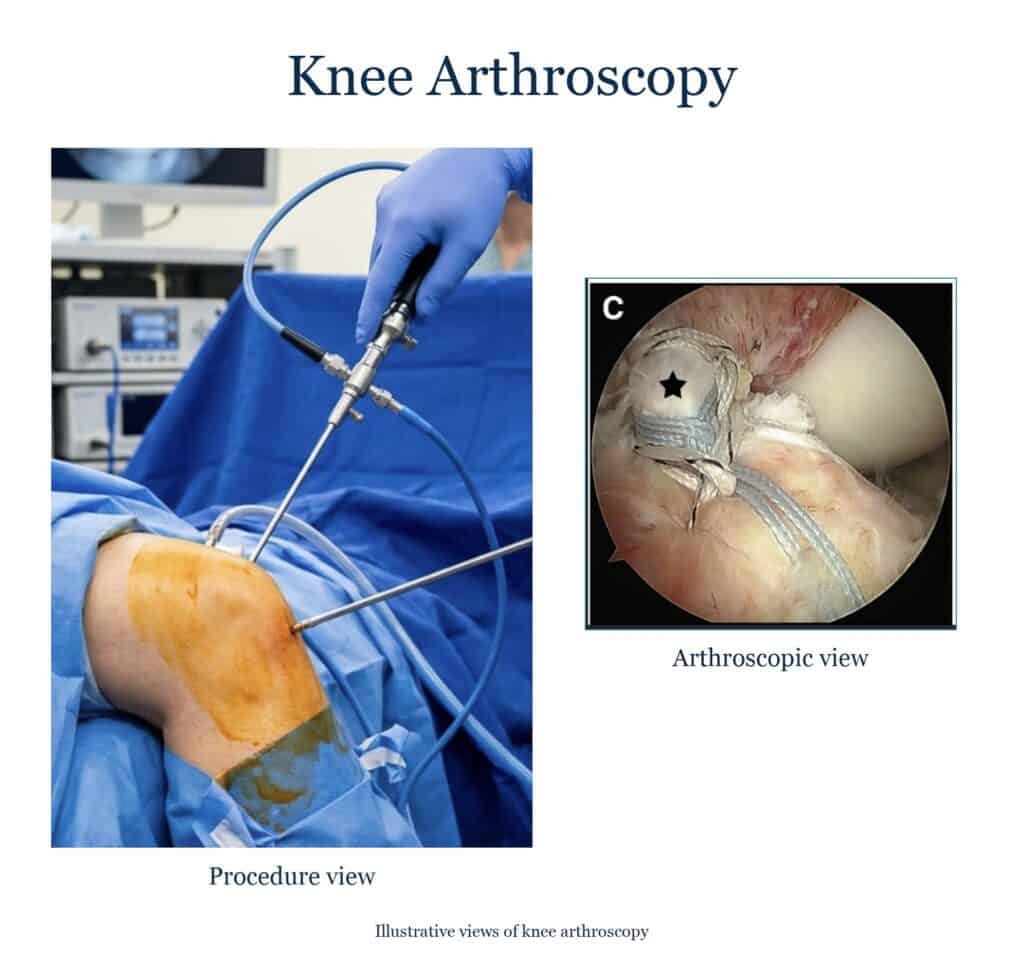
Knee arthroscopy, also known as keyhole surgery, is a less invasive surgical procedure used to diagnose and treat joint issues. Your surgeon investigates the knee and corrects any issues using a small tool called an arthroscope. Through a camera attached to that tool, the joint can be inspected and treated for any identified damage.
Knee arthroscopy has risen in popularity over the years, as the procedure requires only small cuts in the skin and shorter recovery times. The procedure also takes less than an hour and rarely leads to serious complications.
When it is needed
Conditions treated with knee arthroscopy.
Knee arthroscopy is usually recommended for painful conditions that do not respond to non-surgical treatment such as physical therapy, rest and anti-inflammatory medication.
Torn meniscus
Repair or removal of a torn meniscus, one of the most common reasons for keyhole knee surgery.
Patella problems
Treatment of kneecap problems affecting tracking, stability and pain.
Loose fragments
Removal of loose fragments of bone or cartilage from within the joint.
Knee sepsis
Treatment of infection within the knee joint.
Preparation
Preparing for knee surgery.
Although your exact plan will depend on your healthcare provider, most doctors recommend a tailored preparation plan which includes gentle exercises.
You will also be required to stop taking any prescription medicine, such as ibuprofen, in the lead up to the procedure. Around 12 hours before the procedure you will be asked to stop eating to accommodate general anaesthesia.
Recovery
The recovery period.
You will likely be able to leave hospital on the day of the operation. Recovery times vary — some people return to light activities in one to three weeks, others need six to eight weeks.
General recovery practices
Although less invasive, the procedure will still leave you in pain. Applying ice packs on the dressing helps reduce pain and swelling. Keep your leg elevated for several days, and rest well and often.
Medication
You will likely be prescribed painkillers or over-the-counter drugs such as paracetamol for pain management. Aspirin may also be recommended to help reduce the risk of blood clot formation.
Exercises
Exercises before and after surgery strengthen the muscles around the knee to help it recover fully. Your doctor will show you simple stretches and exercises to do at home — never skip them.
Expectations
What if my knee does not feel the same?
Although the aim of knee arthroscopy is a full recovery and helping the joint heal, in some cases you may find that your knee does not work quite as well as it did before it was injured.
In some cases lifestyle changes such as exercise routine adaptations may be required to help protect the joint from further damage. Your doctor can provide guidance on how best to help your knee heal, based on your specific circumstances.
It is our aim to reduce your pain and discomfort, and help you maintain your lifestyle. Dr David Edis will examine your knee and any scans you have, take note of your symptoms and provide the most appropriate treatment plan for you.
Living with hip or knee pain?
Dr David Edis and the team at Victorian Orthopaedic Spine Service will assess your symptoms, explain your diagnosis and recommend the treatment that best suits you.
Get in touch
Contact our rooms.
Our reception team will help you arrange a consultation, answer questions about your referral and let you know what to bring on the day.
Reception hours: Monday to Thursday 9am–4.30pm, Friday 9am–2pm
Response time: within 1–2 business days
Preparing for your appointment →
Referrals
A current GP or specialist referral is required.
Request a consultation
Send us your details and our reception team will be in touch. We aim to reply within 1–2 business days. Fields marked with an asterisk (*) are required.
All information is general in nature. Patients should consider their own personal circumstances and seek a second opinion. Any surgical or invasive procedure carries risks.