
Treatments and surgery
Spinal fusion in Melbourne.
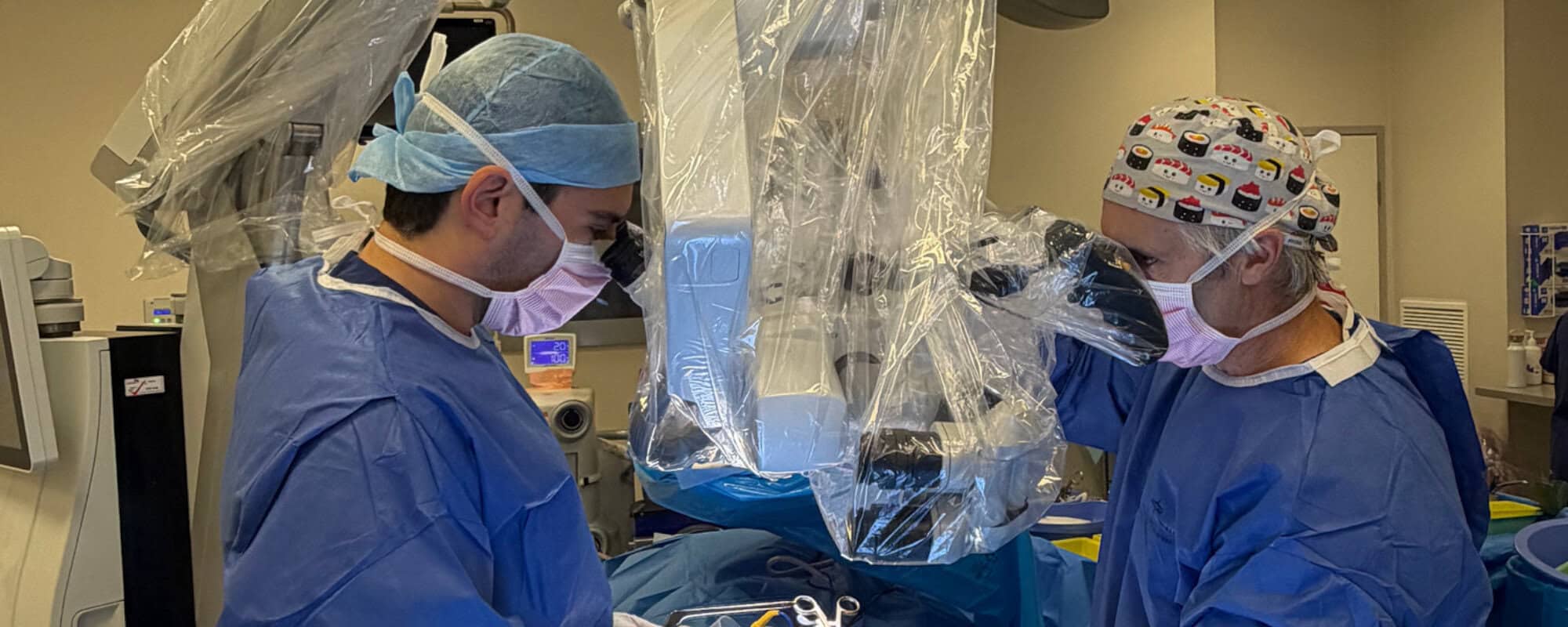
At Victorian Orthopaedic Spine Service, Dr David Edis performs spinal fusion surgery. He also provides a range of non-surgical treatment options.
Overview
What is spinal fusion?
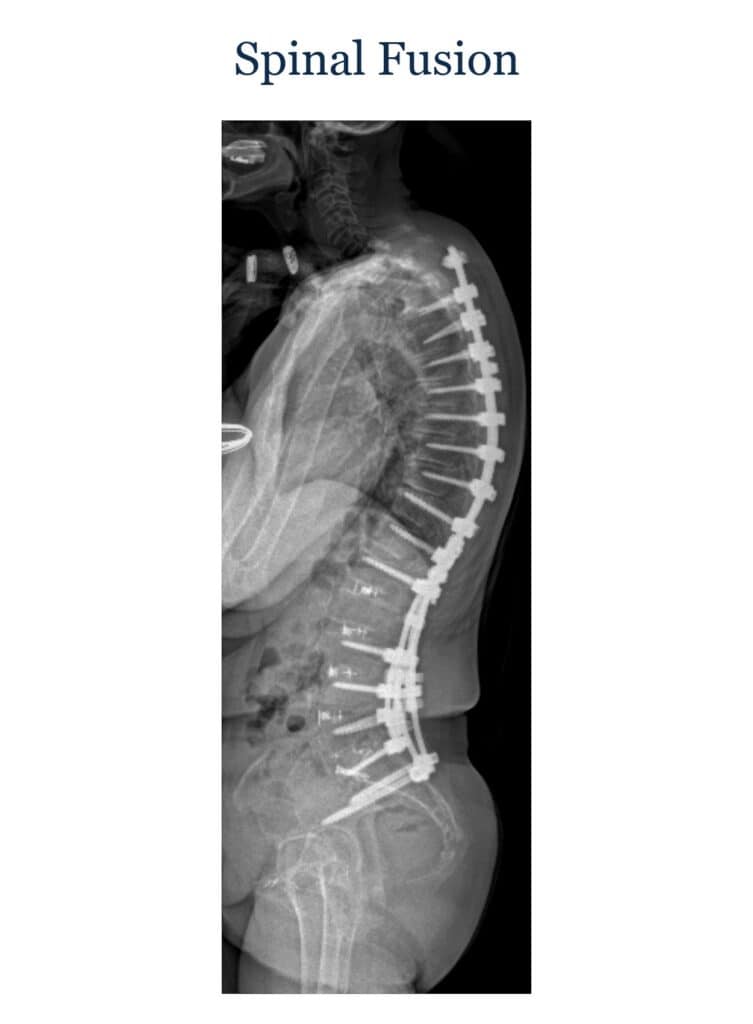
Spinal fusion is a type of back surgery where two or more of the vertebrae in your spine are joined together. It can be performed on any part of your spine.
Spinal fusion aims to improve your spine stability, correct any deformity, and ease your back pain.
Understanding your spine
Four main parts, three sections.
There are four main parts to your spine: your vertebrae, joints, discs and nerves. Your spine has 24 vertebrae plus your sacrum and coccyx at the base — 26 motion segments that give your spine its flexibility.
Your vertebrae are like hollow, bony building blocks that stack on top of each other to create your spinal column. Sandwiched between each vertebra is a shock-absorbing disc that prevents your bones rubbing against each other. As you get older, your discs may degenerate.
- Cervical spine: your neck has 7 small vertebrae known as C1-C7
- Thoracic spine: your chest has 12 vertebrae known as T1-T12, where your ribs attach
- Lumbar spine: your lower back has 5 large vertebrae known as L1-L5 which bear the bulk of your weight
Is it right for you?
You may benefit from spinal fusion if you have:
Spinal nerve or cord compression
Where a nerve or the spinal cord is being compressed — by arthritis, spondylolisthesis, degenerative disc disease, injury or previous surgery.
A spinal deformity
Such as scoliosis, where the curve is affecting your quality of life.
Decision making
How do you decide if spinal fusion is the right choice?
Spinal fusion may ease pain and improve quality of life if your back pain is due to a mechanical problem in your spine.
We begin with a careful examination alongside imaging studies to be sure that your back pain relates to a fracture, deformity or instability in the spine.
Our care pathway is carefully designed to ensure you only progress to surgery if you really need it. If conservative treatments have not worked, and if we are confident that a mechanical problem is causing your back pain, we may recommend spinal fusion.
The procedure
What happens during spinal fusion?
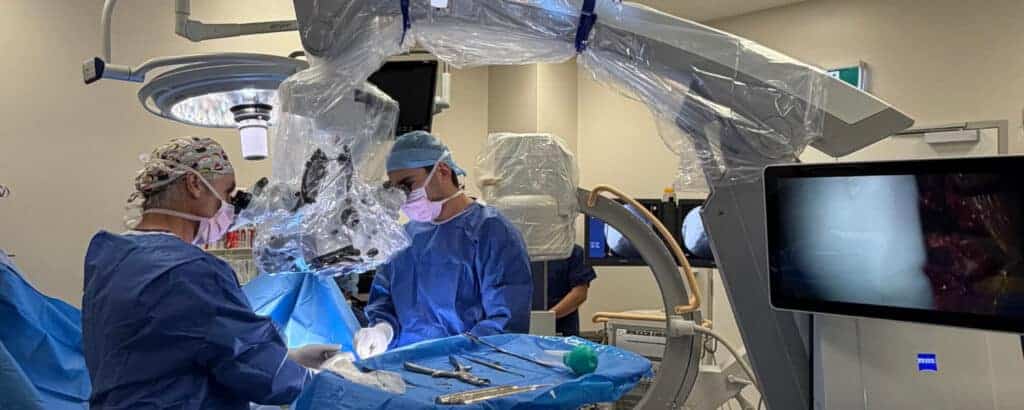
Spinal fusion is done in an operating theatre. You will be given a general anaesthetic so will be asleep.
The exact details of your operation depend on which parts of your spine are being fused. We may gain access to your spine through your neck, abdomen (ALIF procedure), back (PLIF procedure) or side (OLIF procedure).
The bone graft is placed inside a cage to contain the graft and placed into the previous disc space between the vertebra. The bone can be harvested from your pelvic bone or it is donated allograft bone provided by a commercial supplier.
Where possible minimally invasive techniques will be used to reduce damage to important supportive muscles and improve recovery.
Bone graft takes up to a year to fully mature but the internal fixation with screws and rods stabilize the spine until healing is complete.
Recovery and movement
Is it hard to move after spinal fusion?
Spinal fusion is done to stabilize abnormal sections in the spine that are either in the wrong shape or where there is pressure on nerves. The motion available in these diseased segments is often minimal and can be painful which causes muscle tightness that limits motion in other normal segments. Following successful fusion the pain is often improved and motion through the normal remaining segments returns. If surgery is confined to one or two levels, stiffness following surgery is not usually noticeable. If a long fusion is required (over 4 or more levels) to correct spinal deformity then reduced motion is inevitable. Thankfully your hip motion will compensate to a large degree to allow forward and backward motion. The aim of deformity surgery is to achieve global spine balance and often the results in improved pain as well as improved function. You should discuss concerns about loss of motion with fusion with your surgeon.
Living with back, neck or joint pain?
Dr David Edis and the team at Victorian Orthopaedic Spine Service will assess your symptoms, explain your diagnosis and recommend the treatment that best suits you.
Get in touch
Contact our rooms.
Our reception team will help you arrange a consultation, answer questions about your referral and let you know what to bring on the day.
Reception hours: Monday to Thursday 9am–4.30pm, Friday 9am–2pm
Response time: within 1–2 business days
Preparing for your appointment →
Referrals
A current GP or specialist referral is required.
Request a consultation
Send us your details and our reception team will be in touch. We aim to reply within 1–2 business days. Fields marked with an asterisk (*) are required.
All information is general in nature. Patients should consider their own personal circumstances and seek a second opinion. Any surgical or invasive procedure carries risks.