
Treatments and surgery
Robotic spinal surgery in Melbourne.
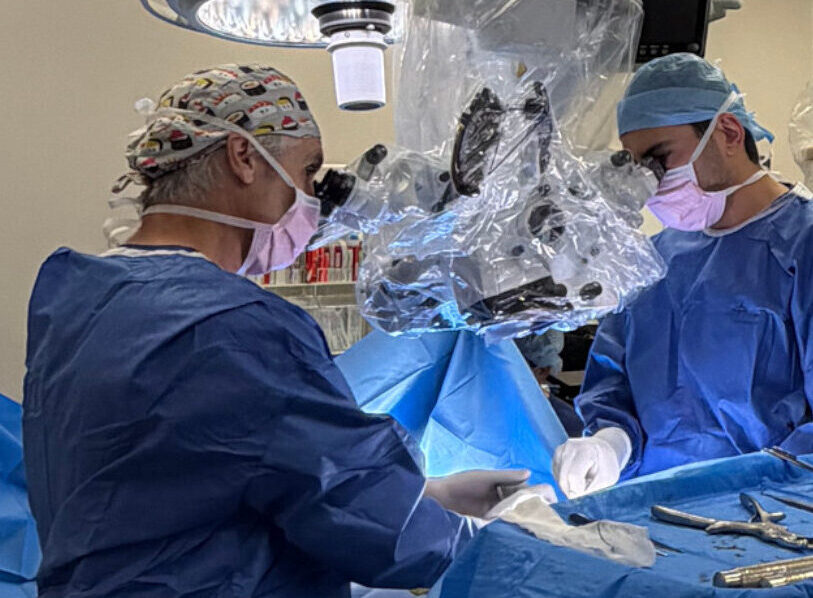
Spine surgery often involves placing screws into your spine. For the operation to succeed, it is vital that these screws are put into exactly the right place. Robotic guidance makes that placement faster, safer and more accurate.
Why robotics
The problem with traditional screw placement.
Traditionally, surgeons have used a series of X-rays taken during the operation to guide screw placement. It works — but it is not ideal, as it exposes both you as the patient and Dr Edis as the surgeon to potentially harmful radiation. And there is still a small risk of not quite getting the screw in the right place.
Complex spinal surgery may involve painstakingly placing 18-20 screws in your back. Each one requires its own series of X-rays and demands immense focus from your spine specialist over 4-6 hours in theatre.
Robotic guidance overcomes those problems. That is why Dr Edis has led research into spinal surgery using robotic guidance systems and why he has been an early adopter of this ground-breaking technology.
The technology
Robotic systems.
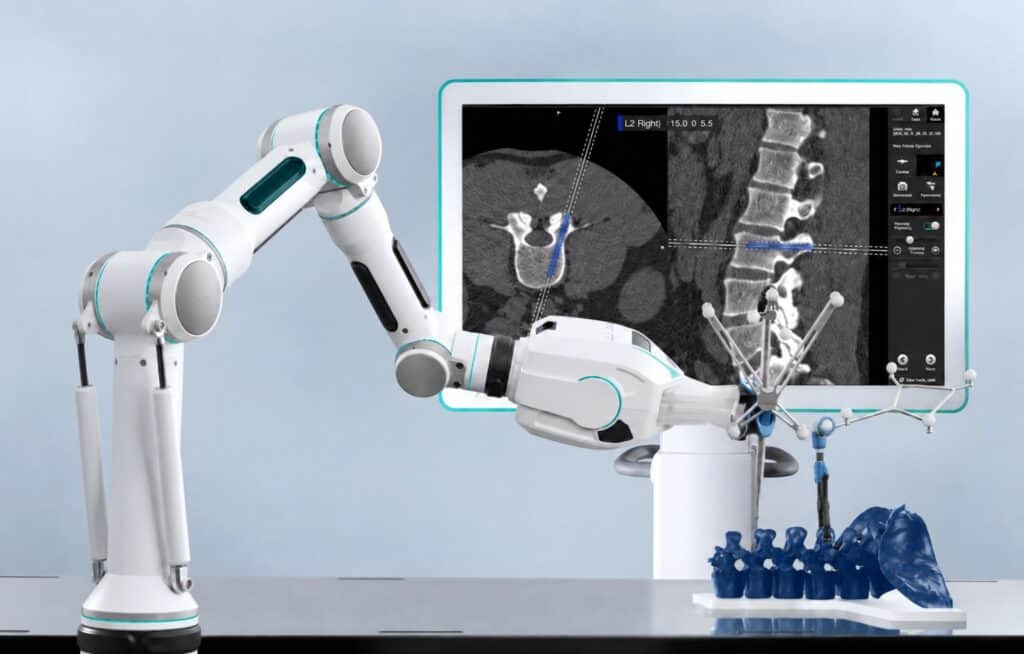
Dr Edis has access to the Globus GPS Robotic system and Mazor X Stealth robot from Medtronic and has extensive experience in both. Updates to both units are expected in 2027 that will further their utility for spine surgery and Dr Edis is at the forefront of these developments.
Image source: Medtronic
What it does
What robotic guidance makes possible.
Less radiation
Reduces the need for X-rays which cause low-level radiation exposure for you and the surgical team.
3D planning
Helps plan your operation by taking scans of your body using 3D analytics.
Precise screw placement
Enables your surgeon to identify the precise spots to place screws, improving accuracy to almost 100%.
Less invasive surgery
Makes surgery less invasive and improves the likelihood of your operation running as planned.
Live guidance
Shows your surgeon what is happening during the operation.
Shorter operations
Screws are placed more quickly, reducing the time you spend under anaesthetic and potentially reducing post-operative pain and recovery time.
Common question
So, there is a robot doing my back surgery?
Well, not quite yet — but maybe in the future.
Do you remember a time before sat navs were common? If you were going somewhere new, you had to drive and navigate at the same time. It took a great deal of concentration to do both tasks well. Now, your smartphone or your car navigates for you. The technology frees you up to concentrate on the road.
Robotic guidance surgery is similar. Dr Edis has planned your surgery and told the robot what to do, then performs the surgery with assistance from the robot guidance system. The robot greatly assists with screw placement, which used to be the longest and most challenging part of spinal surgery. Its reliable accuracy means Dr Edis is able to put most of his focus towards strategy and spinal shaping so that you get the best outcome from your surgery.
Our role
Advancing robotic guidance in spinal surgery.
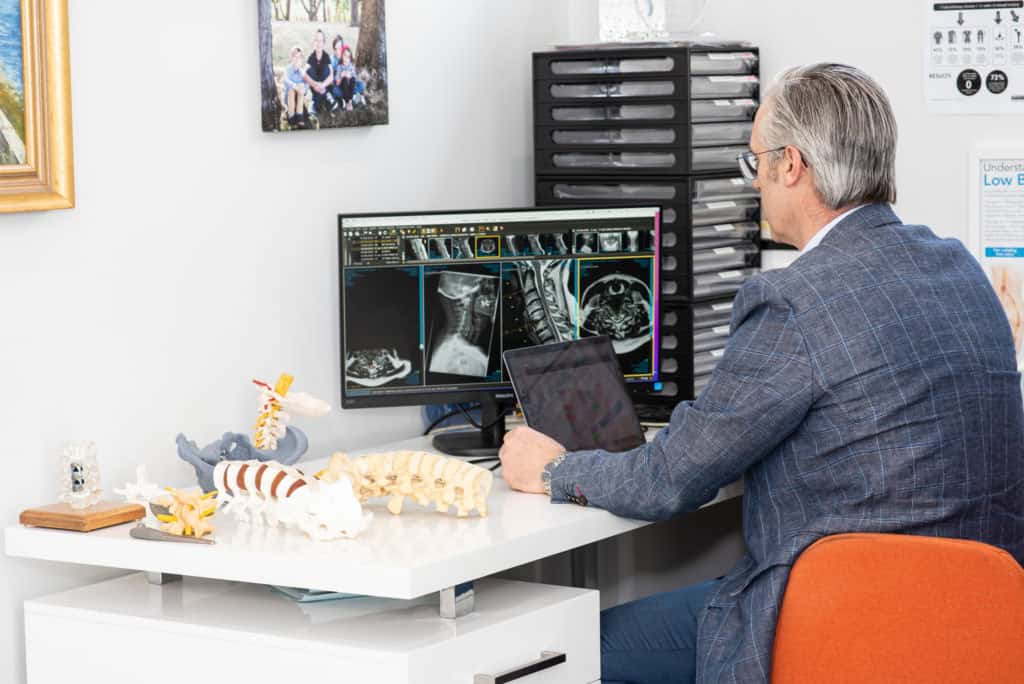
Dr Edis was a newly qualified consultant surgeon when he was introduced to CT Navigated systems, used mostly in knee replacement surgery. Dr Edis performed some pilot studies on use of Navigation in trauma surgery at this time.
He has now adopted the use of the Stryker Mako Knee Robot for knee replacement.
The other statements are accurate and can also state he pioneered the introduction of Mazor X Stealth at Mulgrave Private after Covid 19 pandemic.
Dr Edis now looking forward to the next generation of spine robots due in 2027.
Looking ahead
What does the future hold?
Technology advances rapidly. These robots are versatile with many potential uses in the future. Maybe they will one day have a role beyond guidance. With advances in machine learning and artificial intelligence, it is even possible that the surgeon could operate remotely.
For now, though, you are in very capable hands at the Victorian Orthopaedic Spine Service.
Dr Edis in the media
Press coverage of robotic-assisted surgery.
The Examiner
Coverage of Dr Edis work with robotic guidance systems.
The Advocate
Reporting on robotic-assisted spinal surgery in Tasmania.
Mulgrave Private Hospital News
The first PROlat approach surgery in Australia.
The Mornington Peninsula Magazine
Feature on advanced spinal surgery on the Peninsula.
Living with back, neck or joint pain?
Dr David Edis and the team at Victorian Orthopaedic Spine Service will assess your symptoms, explain your diagnosis and recommend the treatment that best suits you.
Get in touch
Contact our rooms.
Our reception team will help you arrange a consultation, answer questions about your referral and let you know what to bring on the day.
Reception hours: Monday to Thursday 9am–4.30pm, Friday 9am–2pm
Response time: within 1–2 business days
Preparing for your appointment →
Referrals
A current GP or specialist referral is required.
Request a consultation
Send us your details and our reception team will be in touch. We aim to reply within 1–2 business days. Fields marked with an asterisk (*) are required.
All information is general in nature. Patients should consider their own personal circumstances and seek a second opinion. Any surgical or invasive procedure carries risks.