Conditions treated
Myelopathy (Cord Compression)
Myelopathy means the spinal cord itself is being compressed or damaged, most often in the neck. Unlike most back and neck problems it tends to worsen slowly over time, and it is one of the few spinal conditions where earlier surgical treatment often gives a better outcome. Dr David Edis has extensive experience in assessing and treating cord compression.
Overview
What is myelopathy?
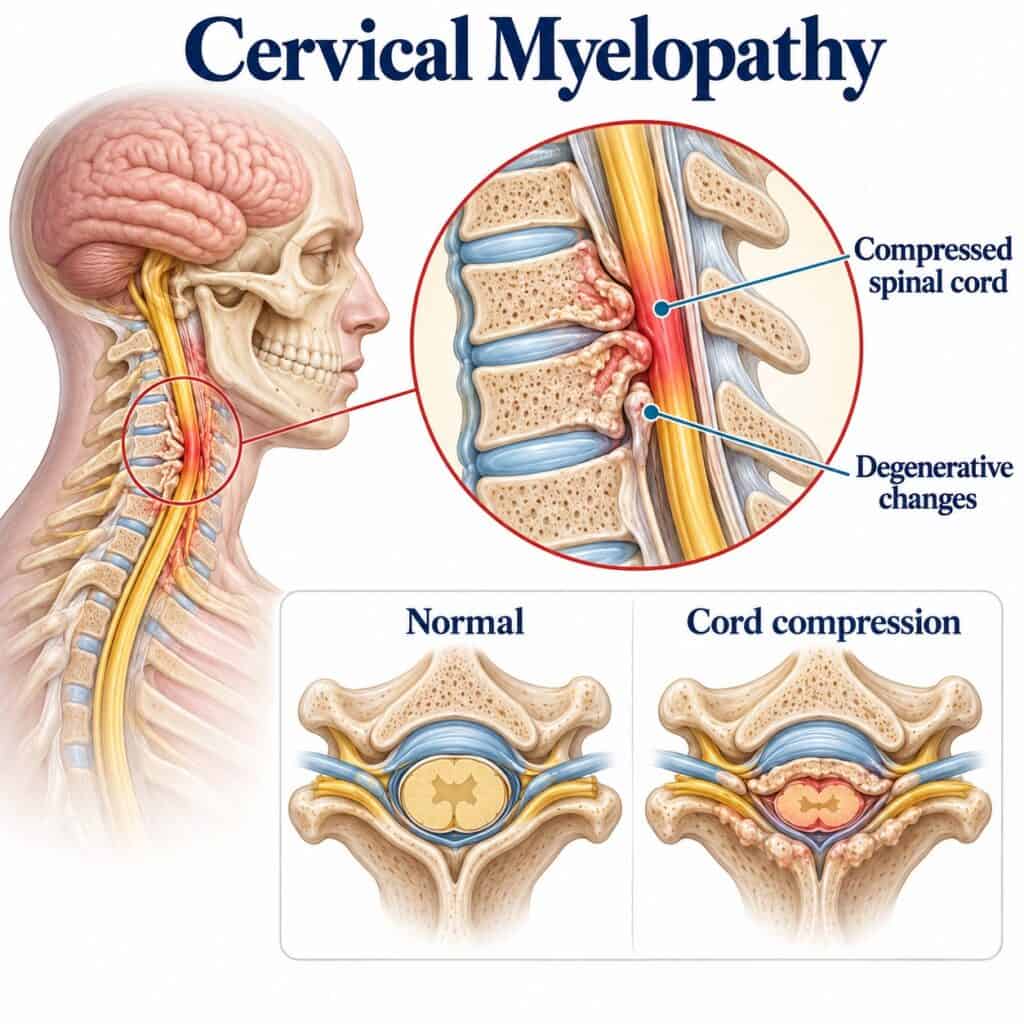
The spinal cord runs through the bony canal of the spine and carries signals between the brain and the rest of the body. When the canal narrows and the cord is squeezed, those signals are disrupted. The most common form is cervical spondylotic myelopathy, caused by age-related wear in the neck, though it can also occur in the thoracic spine.
Because the cord — not just a single nerve root — is affected, symptoms are often subtle at first and involve both the arms and the legs.
Causes
What causes cord compression?
The usual cause is a combination of disc bulging, bony spurs and thickened ligaments narrowing the spinal canal over many years. People born with a narrow canal are more susceptible. Other causes include a large disc prolapse, ossification of the ligament behind the vertebral bodies, injury, tumour or infection.
Timeframe
What are the symptoms?
Typical early symptoms are clumsy hands — difficulty with buttons, writing or handling coins — numbness or tingling in the hands, an unsteady or stiff-legged walk, and a need to hold rails on stairs. Neck pain may be mild or absent. In more advanced cases there is weakness in the arms or legs and changes in bladder control.
Myelopathy usually progresses in a stepwise fashion, with periods of stability between episodes of deterioration. Damage that has already occurred may not fully recover, which is why timely assessment matters.
Diagnosis
How is myelopathy diagnosed?
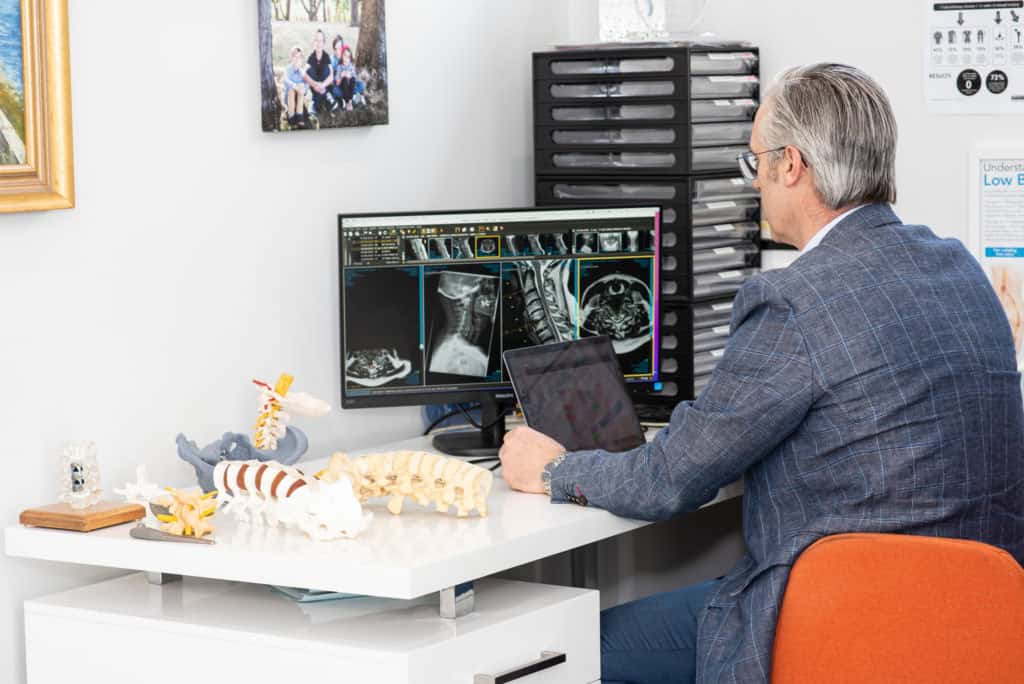
Examination findings such as brisk reflexes, altered coordination and a characteristic gait raise the suspicion of cord compression. An MRI scan confirms the diagnosis, shows the levels involved and can reveal signal change within the cord itself. CT and X-rays help with surgical planning.
Plain X-ray
Not generally helpful for diagnosis on its own, but may give information that complements CT or MRI.
CT scan
Allows cross-sectional and multi-planar reconstructions so spine structures can be studied in detail. The disc prolapse can usually be seen.
MRI
The modality of choice for spinal disorders. Gives exquisite detail of nerves, discs and soft tissue, and uses no ionising radiation.
Bone scan
Nuclear medicine bone scans are sometimes used to supplement diagnosis in spinal disorders, but are typically not helpful in radiculopathy.
Treatment
Treatment options.
Treatment depends on how severe the compression is and whether symptoms are progressing. Mild, stable myelopathy can be monitored, but moderate or progressive myelopathy is generally treated surgically to prevent further deterioration.
Monitoring
Patients with mild symptoms and no progression may be followed with regular clinical review and repeat imaging, with clear advice on the symptoms that should prompt earlier contact.
Physiotherapy
Can help maintain strength, balance and function, but does not relieve the pressure on the cord. High-velocity neck manipulation should be avoided.
Activity advice
Avoiding activities with a risk of sudden neck movement or falls reduces the chance of an acute deterioration while a decision about surgery is being made.
Anterior decompression
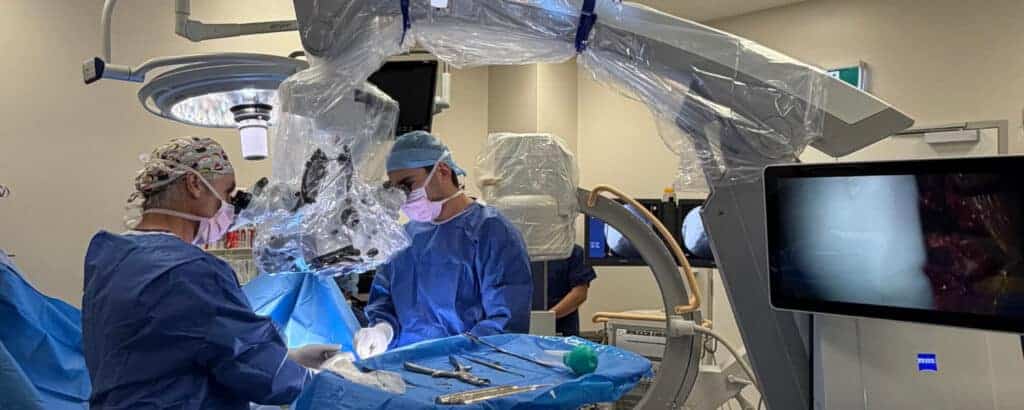
Removing the disc or vertebral body from the front of the neck and fusing the level — or inserting a disc replacement — is used when compression comes from the front and involves one or two levels.
Posterior decompression
Laminectomy or laminoplasty from the back of the neck enlarges the canal over several levels at once, and may be combined with instrumented fusion to maintain alignment.
Navigation and robotics
Dr Edis uses CT navigation and robotic guidance in the majority of his spinal procedures, allowing accurate placement of implants around the spinal cord.
Persistent pain
What can I expect after surgery?
The main goal of surgery is to stop the myelopathy getting worse. Many patients also notice improvement in hand function, walking and pain, particularly when surgery is performed before severe symptoms develop. Recovery of established cord damage is variable, and Dr Edis will discuss realistic expectations with you before any operation. Follow-up continues for at least twelve months to track your outcome.
Living with neck or arm pain?
Dr David Edis and the team at Victorian Orthopaedic Spine Service will assess your symptoms, explain your diagnosis and recommend the treatment that best suits you.
Get in touch
Contact our rooms.
Our reception team will help you arrange a consultation, answer questions about your referral and let you know what to bring on the day.
Reception hours: Monday to Thursday 9am–4.30pm, Friday 9am–2pm
Response time: within 1–2 business days
Preparing for your appointment →
Referrals
A current GP or specialist referral is required.
Request a consultation
Send us your details and our reception team will be in touch. We aim to reply within 1–2 business days. Fields marked with an asterisk (*) are required.
All information is general in nature. Patients should consider their own personal circumstances and seek a second opinion. Any surgical or invasive procedure carries risks.