
Conditions treated
Neck and Arm Pain
Neck pain, and pain that radiates from the neck into the shoulder, arm or hand, is very common and usually settles with time and simple treatment. Dr David Edis assesses and treats the full range of cervical spine conditions, from simple neck strain through to nerve compression and spinal cord problems.
Overview
What is neck and arm pain?
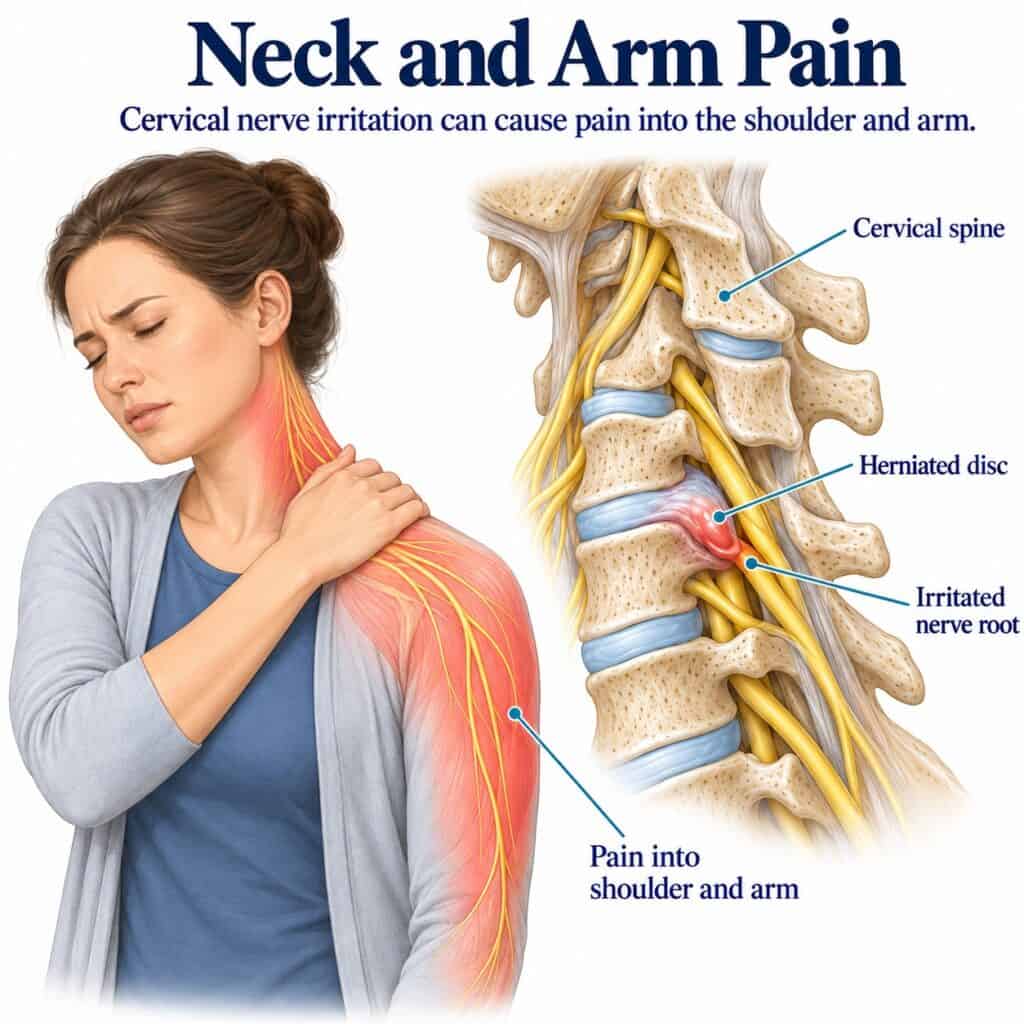
Neck pain is felt in the back of the neck and may spread to the base of the skull, the top of the shoulders or between the shoulder blades. It is most often caused by strain or wear in the discs and facet joints of the cervical spine.
When a nerve root in the neck is irritated or compressed, pain travels along that nerve into the arm — a condition called cervical radiculopathy. It is often accompanied by pins and needles, numbness or weakness in a particular part of the arm or hand, and is the neck’s equivalent of sciatica in the leg.
Causes
What causes neck and arm pain?
The most common causes are a herniated (prolapsed) disc in the neck, which is more common in younger adults, and narrowing of the nerve exit canals from disc and facet joint wear, which is more common with age. Less common causes include injury, inflammatory arthritis, infection or tumour.
If pressure affects the spinal cord itself rather than a single nerve root, it can cause clumsy hands, balance difficulty and weakness in the legs. This is called myelopathy and needs prompt assessment.
Timeframe
How long does it last?
Most episodes of simple neck pain improve within a few weeks. Arm pain from a disc prolapse can be severe at first but usually improves over six to twelve weeks as the disc material shrinks and the nerve settles. Numbness and weakness generally recover more slowly than pain.
Diagnosis
How is it diagnosed?
The pattern of pain and any change in sensation, strength or reflexes usually points to the level involved. Imaging is arranged when symptoms are severe or persistent, when there is weakness, or when there are any signs of spinal cord involvement.
Plain X-ray
Not generally helpful for diagnosis on its own, but may give information that complements CT or MRI.
CT scan
Allows cross-sectional and multi-planar reconstructions so spine structures can be studied in detail. The disc prolapse can usually be seen.
MRI
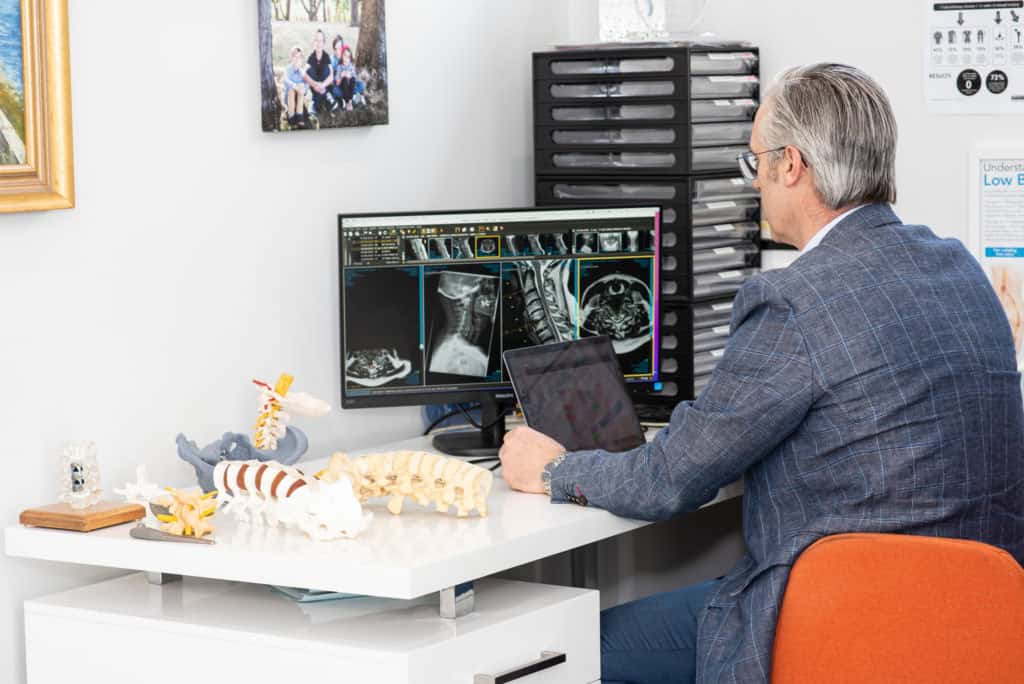
The modality of choice for spinal disorders. Gives exquisite detail of nerves, discs and soft tissue, and uses no ionising radiation.
Bone scan
Nuclear medicine bone scans are sometimes used to supplement diagnosis in spinal disorders, but are typically not helpful in radiculopathy.
Treatment
Non-surgical treatment options.
Most neck and arm pain settles without surgery. The aims of treatment are to control pain while the nerve recovers and to restore normal neck movement and posture.
Activity and posture
Keep the neck moving within comfort and avoid sustained positions such as prolonged screen use with the head forward. A supportive pillow can help with night pain.
Physiotherapy
Gentle mobilisation, postural retraining and strengthening of the neck and shoulder-blade muscles help both recovery and prevention of recurrence.
Simple analgesics
Regular paracetamol and short courses of anti-inflammatory medication are the first-line options. Stronger pain relief may be needed briefly for severe arm pain.
Nerve pain medication
Medications that calm irritated nerves can help with the burning, shooting quality of radicular arm pain and with sleep. They are used for a limited period and tapered as pain settles.
Nerve root injections
A CT-guided injection of cortisone around the affected nerve root can settle inflammation and give relief that allows rehabilitation to progress, and can help confirm which level is responsible.
Collars and traction
A soft collar may be used for a few days in an acute flare, but prolonged use weakens the neck. Traction helps some patients with radicular pain in the short term.
Persistent pain
When is surgery considered?
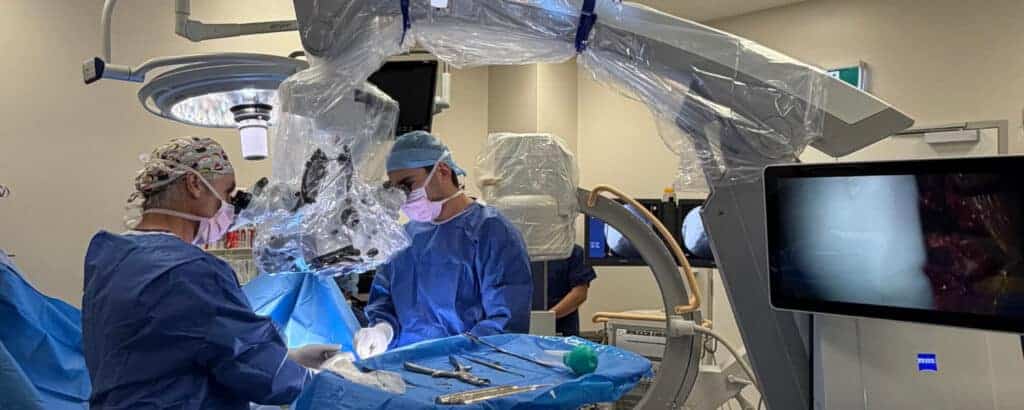
Surgery is considered when arm pain has not settled after an adequate trial of non-surgical treatment, when there is progressive weakness, or when there are signs of spinal cord compression. The most common procedures are anterior cervical decompression and fusion, cervical disc replacement, and posterior foraminotomy. Dr Edis will explain the options, benefits and risks that apply to your situation.
Living with neck or arm pain?
Dr David Edis and the team at Victorian Orthopaedic Spine Service will assess your symptoms, explain your diagnosis and recommend the treatment that best suits you.
Get in touch
Contact our rooms.
Our reception team will help you arrange a consultation, answer questions about your referral and let you know what to bring on the day.
Reception hours: Monday to Thursday 9am–4.30pm, Friday 9am–2pm
Response time: within 1–2 business days
Preparing for your appointment →
Referrals
A current GP or specialist referral is required.
Request a consultation
Send us your details and our reception team will be in touch. We aim to reply within 1–2 business days. Fields marked with an asterisk (*) are required.
All information is general in nature. Patients should consider their own personal circumstances and seek a second opinion. Any surgical or invasive procedure carries risks.