
Procedures
Laminectomy surgery.
A laminectomy is a form of back surgery done to decompress your spine and ease nerve-related back pain when medication or physiotherapy has not helped. Here is what is involved.
Overview
What is a laminectomy?
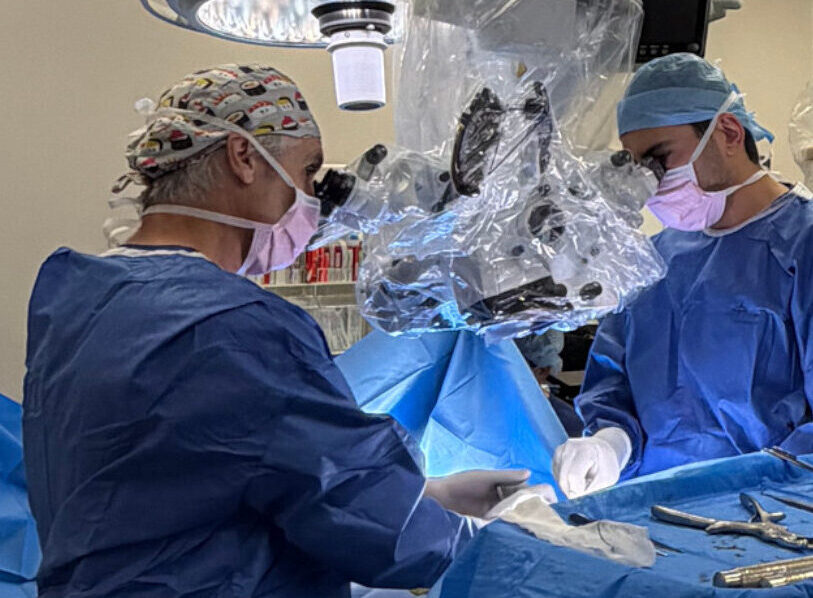
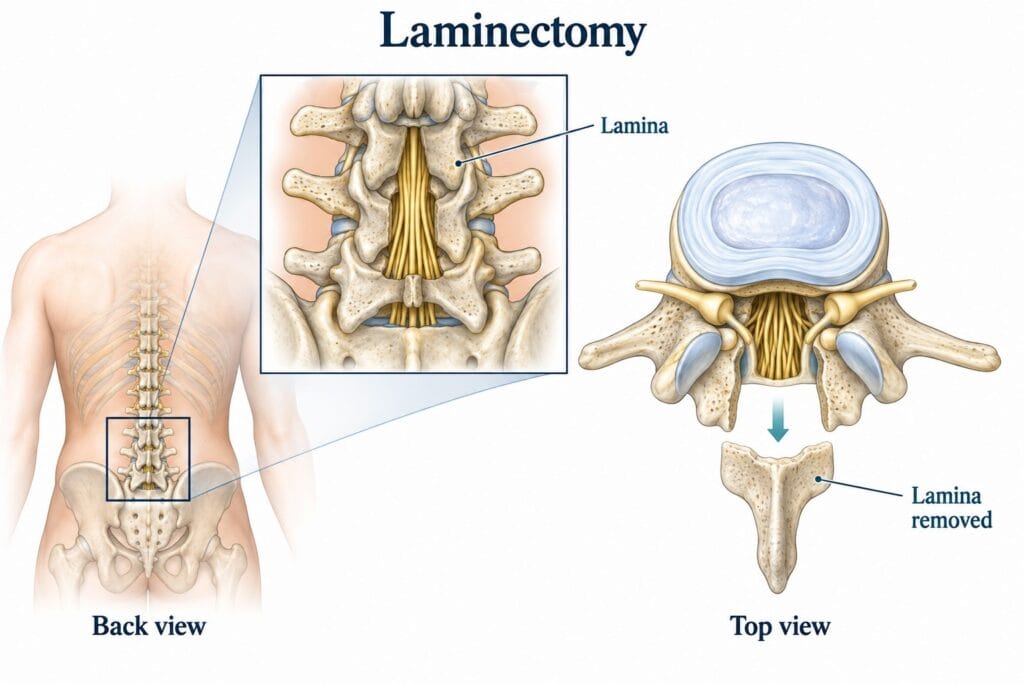
A laminectomy is a type of spinal decompression surgery done to relieve pressure on your nerves. Your surgeon removes some or all of your lamina — the back part of your vertebra that covers your spinal canal.
It is sometimes combined with other spinal surgeries, depending on your needs. Laminectomy recovery may take a few weeks and often involves physiotherapy to help you gain strength and flexibility.
Why it is performed
Making room for your nerves.
Your spine is made of hollow, bony building blocks called vertebrae that stack on top of each other with a cushioning disc between them. The hollow space inside this column is called your spinal canal — a protected space that houses your spinal cord, the long cable of nerves that connect your brain and body.
Some conditions put pressure on your spinal canal and nerve roots, making the canal narrower than it should be. If there is no longer enough space for your spinal cord and nerves, you may experience pain, weakness or numbness that radiates down your arms or legs.
A laminectomy enlarges your spinal canal to relieve the pressure. You may need one if your spinal cord or nerve roots are under pressure from an injury, a herniated disc, spinal stenosis or a tumour. It is usually only done when non-surgical treatments have not succeeded, or if you are living with severe symptoms such as incontinence or difficulty walking.
Risks
Risks of a laminectomy.
Any surgical procedure carries risks, meaning surgery should only be considered if the benefits are likely to outweigh them. The risks of a laminectomy include:
- Risks linked to the use of general anaesthesia
- Bleeding
- Infection
- Blood clots in the legs or lungs
- Dural tear
- Spinal cord or nerve root injury
- Injury to the nerves or blood vessels near the surgical site, causing weakness or numbness
- Other risks depending on your particular condition
One complication to be aware of is post-laminectomy syndrome, also known as failed back surgery syndrome — pain that persists or begins after a laminectomy and can lead to chronic pain. There may be a number of different reasons, and you will require careful reinvestigation to find if there is any other cause of your persistent symptoms. It is important to discuss the potential risks of surgery with your surgeon before the operation.
The procedure
What to expect from your laminectomy.
Before surgery
Your surgeon will explain the procedure and ask for your written consent. You will need to give details of any regular medication you take and may need to fast in preparation for your anaesthetic.
During surgery
A laminectomy is performed in an operating theatre under general or spinal anaesthesia. Techniques vary — sometimes it is done with minimally invasive techniques using only small incisions, and sometimes as an open procedure, depending on your condition, body size and the number of levels involved.
Combined procedures
Laminectomies are often combined with other procedures, such as removing a herniated disc (discectomy) or stabilising your spine through spinal fusion.
Recovery
Recovery after laminectomy.
A short stay in hospital is common after a laminectomy. You will hopefully be up and walking on the day of your operation, and will be given medication to manage any pain. Once you are back home, your recovery may involve:
- Keeping the surgical site clean and dry
- Not driving until you are given the all clear to do so
- Avoiding arching your back or bending over for a little while
- Beginning physiotherapy to improve your strength and flexibility
Recovery times vary depending on exactly what you have had done and how demanding your daily life is. If you have an uncomplicated laminectomy and a fairly sedentary job, you may be able to return to work within a few weeks. If you have had a laminectomy combined with spinal fusion, your recovery time may be longer.
Living with back or leg pain?
Dr David Edis and the team at Victorian Orthopaedic Spine Service will assess your symptoms, explain your diagnosis and recommend the treatment that best suits you.
Get in touch
Contact our rooms.
Our reception team will help you arrange a consultation, answer questions about your referral and let you know what to bring on the day.
Reception hours: Monday to Thursday 9am–4.30pm, Friday 9am–2pm
Response time: within 1–2 business days
Preparing for your appointment →
Referrals
A current GP or specialist referral is required.
Request a consultation
Send us your details and our reception team will be in touch. We aim to reply within 1–2 business days. Fields marked with an asterisk (*) are required.
All information is general in nature. Patients should consider their own personal circumstances and seek a second opinion. Any surgical or invasive procedure carries risks.